
Czech Republic Group Tours
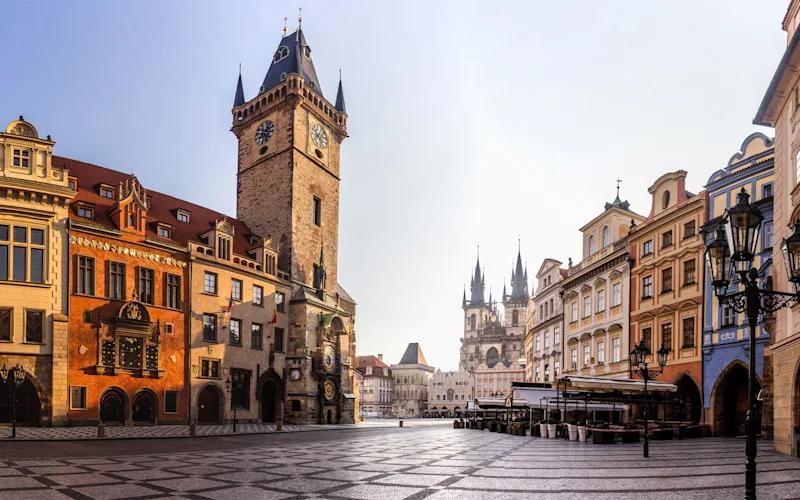
The Czech Republic offers a compact yet highly rewarding travel experience, combining historic cities, medieval towns, cultural landmarks, and scenic countryside within a relatively small and easy-to-navigate country. It is best known for Prague, one of Europe’s most visually striking capitals, but extends far beyond into charming towns, castles, and lesser-known regions that provide a quieter and more local perspective.
This makes the country particularly attractive for travelers who want a rich cultural experience without long travel distances. Visitors can explore architectural landmarks, historic squares, and riverside settings while also discovering smaller towns and natural areas within a short journey from the capital.
The Czech Republic stands out for its strong sense of identity, preserved history, and affordability compared to many Western European destinations, making it ideal for both first-time visitors and those looking for a deeper, slower-paced exploration of Central Europe.
Czech Republic at a glance
Prague
10.7 million
Czech Koruna (CZK)
Czech
+420
Type E plugs
Central European Time (CET, UTC+1)
Our Czech Republic tours and holidays

Learn more about Czech Republic
The most popular time to visit is from May to September, when the weather is warm and ideal for walking tours and sightseeing. Spring and early autumn offer fewer crowds and pleasant conditions, while December is a popular time for festive markets and winter atmosphere.
5 to 8 days is generally sufficient for the Czech Republic due to its compact size. This allows travelers to explore Prague in depth while also including day trips or short stays in towns like Český Krumlov or Kutná Hora. Travelers combining it with nearby countries may opt for a shorter stay, while those seeking a slower pace can extend their time to explore more regional areas.
The Czech Republic provides reliable tourism services, particularly in Prague and major tourist regions. Accommodation options range from hotels and boutique stays to hostels and apartments. Public transportation is efficient, with trains and buses connecting cities and towns, and Prague itself offers a well-developed metro and tram system.
Guided tours, cultural experiences, and excursions are widely available, especially in Prague, including walking tours, historical visits, and food experiences. Booking services are easily accessible online, and the country is considered very manageable for independent travelers. While services are slightly less extensive than in larger countries, they are still more than sufficient for smooth and flexible travel planning.
The Czech Republic’s culture is rooted in a long and complex history that includes medieval kingdoms, the Bohemian Empire, and later influences from the Austro-Hungarian Empire. Its cities are known for remarkably preserved architecture, including Gothic, Baroque, and Renaissance styles, which give many areas a timeless, storybook feel.
Cultural life is deeply tied to art, music, and literature, with a strong tradition of classical music and theatre. The country is also globally recognized for its beer culture, with brewing traditions that date back centuries and remain central to social life today.
Czech identity is strongly expressed through local traditions, festivals, and everyday customs, with regional differences adding depth to the overall experience. Visitors can see this reflected in historic towns, local crafts, and cuisine, which includes hearty and comforting dishes such as goulash, dumplings, and roasted meats.
The Czech Republic uses the Czech Koruna (CZK) as its official currency, and it is important for travelers to use local currency for most transactions. While some tourist-focused businesses in Prague may accept euros, this is not standard practice and often comes with unfavorable exchange rates.
Cash is commonly used, particularly in smaller towns, local restaurants, and markets, though card payments are widely accepted in cities and major tourist areas. ATMs and exchange offices are easy to find, especially in Prague. Travelers should be mindful of exchange rates and use reputable exchange services. Tipping is customary, generally around 5% to 10% in restaurants, depending on service quality.
Goulash, svíčková (beef with creamy sauce), dumplings, trdelník (pastry), Pilsner beer, roasted pork knuckle.
Czech Republic FAQs
Do I Need a Visa to Travel to the Czech Republic? The Czech Republic is part of the Schengen Area. Travelers from the EU, UK, US, Canada, Australia, and many other countries can enter visa-free for up to 90 days within a 180-day period. Always check current entry requirements before traveling.
Is Tipping Customary in the Czech Republic? Yes. Tipping is appreciated, with around 5–10% being standard in restaurants. It is common to round up the bill rather than leave cash on the table.
What Is the Internet Access Like in the Czech Republic? Internet access is widely available and reliable, especially in Prague and major cities. Most hotels, cafes, and restaurants offer free Wi-Fi.
Can I Drink the Water in the Czech Republic? Yes. Tap water is safe to drink throughout the country.
Are Credit Cards Widely Accepted? Cards are widely accepted in cities and tourist areas, but cash (Czech Koruna) is still commonly used, especially in smaller towns, markets, and local establishments.
Do I Need Travel Insurance? Travel insurance is not mandatory for all visitors but is strongly recommended to cover medical expenses, delays, or cancellations.